Homework requires more than knowing the content. A child must find the materials, understand the instruction, choose where to begin, manage frustration, return after distraction and recognise when the task is actually complete.
Find the point where progress stops
Ask the child to show you the first part that becomes difficult. The barrier may be an unclear instruction, a task that feels too large, missing materials, tiredness, worry about making a mistake or not knowing how to ask for help.
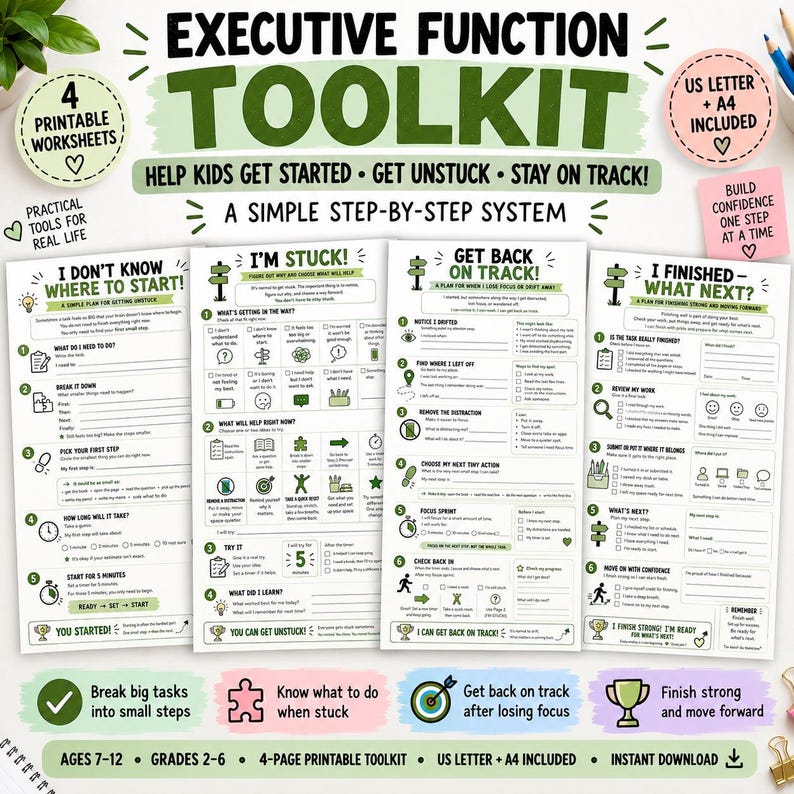
A four-part routine
- Start: read the instruction and choose the smallest first action.
- Get unstuck: name the barrier and choose one strategy to try.
- Return to focus: find where you left off, remove one distraction and do a short focus sprint.
- Finish: check the instruction, review the work, submit or store it correctly and tidy the materials.
Support without taking over
Adults can make the process visible without completing the work. Help the child identify the first action, then step back. If the method or content is genuinely unclear, record that difficulty for the teacher rather than disguising it by doing the work for the child.
When to speak to the teacher
Repeated difficulty, unusually long sessions or continuing distress are reasons to share specific observations: what was assigned, how long the child tried, what they managed independently and exactly where they became stuck.
Matching live resource
Executive Function Workbook for Kids
A 17-page focus and planning workbook in A4 and US Letter PDF formats.